
The Hidden Challenges of Learning Makeup
Makeup is a fascinating medium for self-expression; a tool that can enhance, modify, and in some cases, completely transform one’s appearance. As a form of empowerment, it has few equals.
It has never been as popular or as widely practiced as it is today. With the rise of social media, beauty and makeup have become more accessible than ever before. Yet within this flood of visual stimulation and influencer-driven culture, it can be surprisingly difficult to find advice and training that truly suit your individual features and needs.
If you’ve followed the beauty industry for any length of time, you’ve likely noticed how quickly trends, techniques, and terminology evolve. What is fashionable one season may disappear the next. For someone interested in learning makeup seriously, it can be difficult to know where to begin.
Most likely, you’ve watched countless influencers — individuals who are dynamic, highly skilled in makeup techniques, and very knowledgeable when it comes to working on their own faces. However, their reality is that they are creating content for visibility, not building a curriculum designed to develop your skills.
Their objective is engagement: views, followers, recognition. The information they share is often shaped by that goal, rather than by a structured intention to educate.
For those whose passion draws them toward the cosmetics aisle, the opportunities for structured and meaningful education in makeup and skincare are actually quite limited.
The Aesthetic Route
Many aesthetic programs include some form of makeup training, ranging from basic to more elaborate techniques. However, these programs are often government-approved curricula that evolve very slowly. Many have remained largely unchanged for over twenty years — which, in the beauty industry, feels like an eternity.
Another important factor is that many instructors in aesthetic programs are not actively working makeup artists. They are often teachers of aesthetics who may be passionate about makeup, but who do not regularly work in the field. As a result, their experience with a wide range of skin tones, textures, and real-world conditions may be somewhat limited.
These types of programs tend to prepare students for basic beauty applications: retail environments, graduations, or simple bridal makeup. In many cases, the underlying objective is closely tied to product sales — encouraging clients to purchase multiple products.
In a retail context, this often translates into makeup routines that feel long, rigid, and overly structured — a sequence of precise steps designed to achieve a specific result. Yet most clients are simply looking for solutions that are practical, efficient, and suited to their lifestyle, time, and budget.
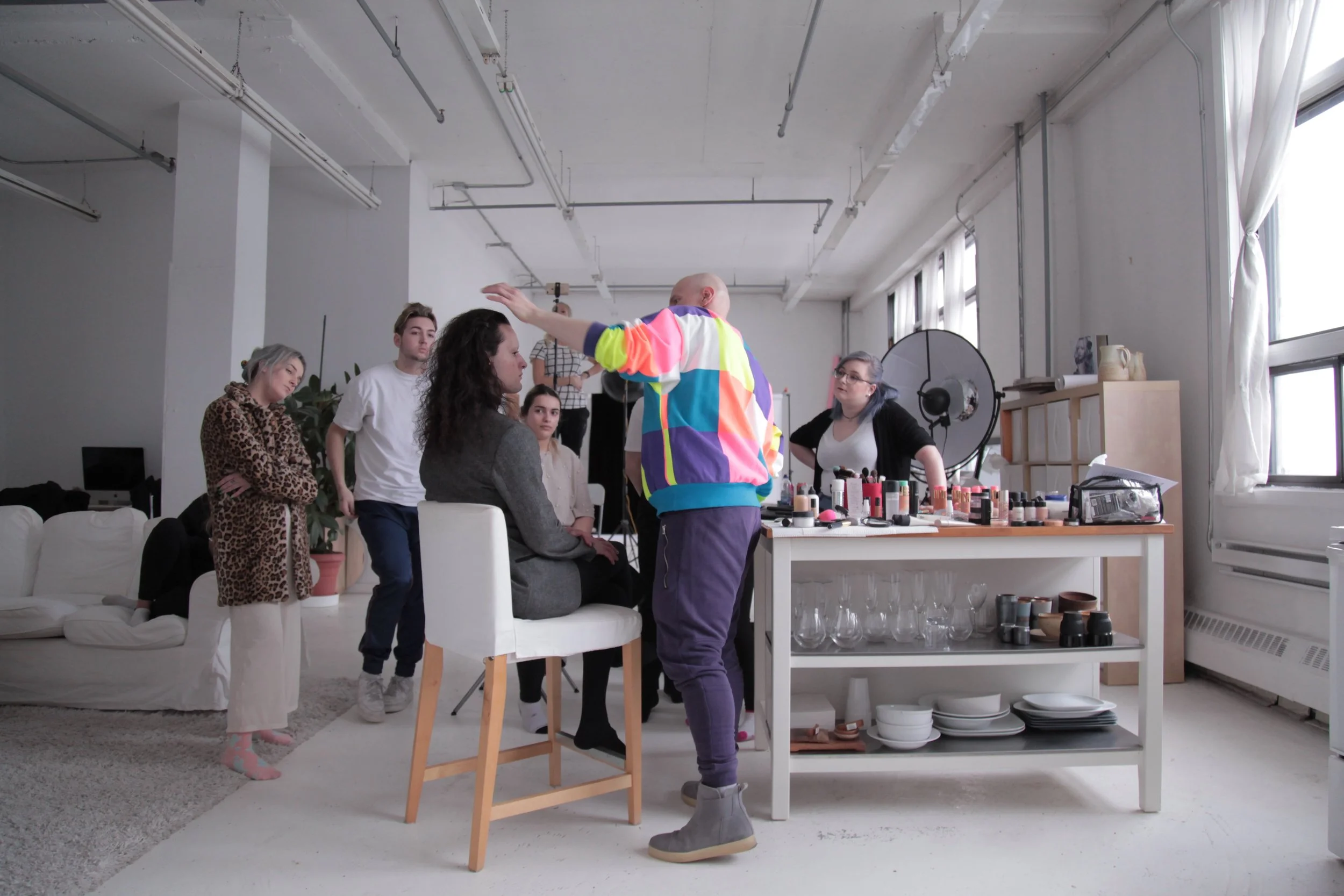
Teaching small groups of aspiring makeup artists, often the best way to learn.
The Artistry
True makeup artistry, however, goes much deeper than this.
It requires understanding not only the desired look, but also the context in which it will be seen. Who is wearing it? In what environment? Under what lighting? How can the look be adapted to suit the individual without compromising the artistic intention?
A skilled makeup artist learns to adapt. Day and night, natural refinement or dramatic expression, stage, in-person events, photography, and film all require different techniques and approaches. There is no universal formula. Everything must be tailored to the face in front of you.
Makeup artistry is not simply the application of color. It is about harmony — the balance between natural coloration, areas of discoloration, skin texture, facial structure, and the desired result.
A truly beautiful makeup does not mask the face. It enhances what is already there.
Private Institutions
There are, of course, private schools that offer valuable opportunities to study makeup artistry. These programs are often more specialized than aesthetic programs. However, they too can be affected by the slower pace of institutional change.
Updating a curriculum requires time, coordination, and financial investment. As a result, even programs that are closer to the current industry may not evolve as quickly as the beauty world itself.
Another characteristic of many programs is their rigid structure. Courses are divided into subjects, with a fixed number of hours assigned to each. The goal is to produce a well-rounded artist capable of performing a variety of techniques.
However, while students may be introduced to many skills, they often do not have enough time to truly master any of them.
More recently, I encountered an independent school that had taken the opposite approach — offering programs exceeding one thousand hours for a single course, with three separate programs available.
For someone who enjoys structured academic learning, this may be appealing. But in my experience, many makeup artists are creative individuals who struggle to remain engaged within such extended academic frameworks.
When Programs Close
For many years, I had the privilege of teaching in the Fashion & Beauty and Master Class makeup programs at LCI International’s Montreal campus. One of the strengths of that environment was the freedom the teaching staff had to adapt and update the curriculum.
This allowed us to remain highly responsive to industry changes and to prepare students for the realities of professional work, rather than an outdated approximation of it.
When these beauty programs closed, nearly forty years of makeup education in Montreal lost its foundation. This was particularly impactful for aspiring artists — a new generation suddenly found itself with fewer pathways to learn the craft and begin building a career.
During this transitional period, I taught in several aesthetic and private institutions. This allowed me to observe the current educational landscape more closely.
In one program, I was struck by how outdated the curriculum had become — older techniques, limited approaches, and teaching methods that separated clients into rigid categories, often without sensitivity or awareness of how this might be perceived.
At the same time, I taught within a ministerial vocational program. While students had access to a wide range of products, the structure was fragmented, the classes overcrowded, and there was often a noticeable resistance to learning. Although the program was accessible and free for local students, the overall quality of education remained inconsistent.
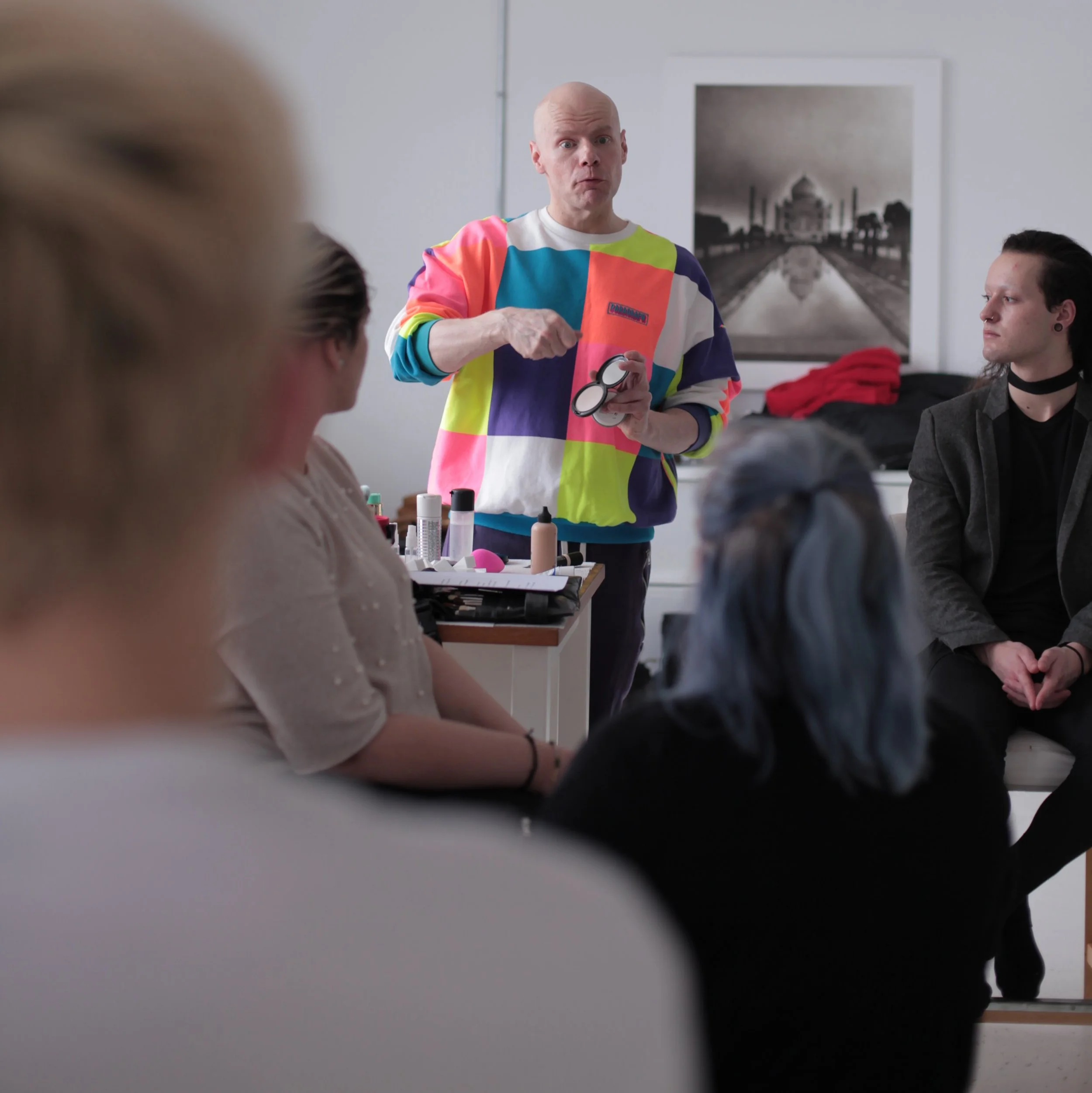
Teachers who bring passion and reason together, inspire more students.
Customized Learning
These experiences reinforced something I had already come to understand, there is a growing need for modern, professional makeup education — education that evolves alongside the industry.
This is one of the reasons I now offer private, customized mentorship, both online and in person.
With more than thirty years of experience in the beauty industry and over twenty years of teaching, I have developed a depth of knowledge that I take great pride in sharing with the next generation of artists.
And perhaps most importantly, I remain deeply passionate about makeup. Each face is a new canvas. Each product offers new creative possibilities. The craft continues to evolve, and that is part of what makes it endlessly engaging.
If you are interested in learning more about my mentorship programs, I invite you to reach out. I would be happy to guide you toward the skills and knowledge that will be most valuable for your personal or professional journey.
Whether your goal is to become a professional makeup artist or simply to learn techniques that are truly suited to your features and lifestyle, I can help you develop a personalized approach.
A strong education is not one-size-fits-all. It is built around the individual.
