
Live to Tell: How Madonna Taught Me to Express Myself
This Fire Horse year feels rich with milestones. Beyond reaching my own mid-century mark, I am also celebrating forty years since I first discovered Madonna. At the time, I could never have imagined that this woman would help shape my beliefs, my sense of self, and my understanding of expression—teaching me not only to speak for myself, but also to stand up for those less heard.
Madonna’s voice called to me. There was something in her tone, her message, her presence that felt immediate and magnetic. She was a chameleon—constantly transforming—where performance art met pop mythology, creating something timeless and ever-evolving.
This Fire Horse year feels rich with milestones. Beyond reaching my own mid-century mark, I am also celebrating forty years since I first discovered Madonna. At the time, I could never have imagined that this woman would help shape my beliefs, my sense of self, and my understanding of expression—teaching me not only to speak for myself, but also to stand up for those less heard.
Madonna’s voice called to me. There was something in her tone, her message, her presence that felt immediate and magnetic. She was a chameleon—constantly transforming—where performance art met pop mythology, creating something timeless and ever-evolving.
I was ten years old. My father had already introduced me to the golden age of Hollywood, and I had developed a deep fascination for Marilyn Monroe. Then Madonna released Live to Tell.
The song—composed by Patrick Leonard and Madonna herself—was haunting in its simplicity. Its long instrumental passages created a hypnotic atmosphere that drew me in completely. I remember asking my mother to take me to the record store so I could buy the cassette maxi-single. I played it endlessly, listening to every version, over and over again, completely entranced.
Live to Tell, a still, from the video, released in 1986
That same summer, during one of our annual visits to my aunt and uncle, I found True Blue at the Eaton Centre in Toronto. That moment deepened something—what had been fascination became attachment. A bond was forming.
Even though my mother and aunts didn’t share my enthusiasm, they couldn’t resist the melodic perfection of La Isla Bonita. That song, with its Spanish influences, hinted at something broader—Madonna’s ability to blend cultures and sounds into something universally compelling.
By the time I turned thirteen, Like a Prayer arrived, along with its controversy. The imagery, the themes, the boldness—it marked a shift. Madonna was no longer simply a pop star; she was a cultural force, using her platform to provoke, question, and expand boundaries.
Her tours became legendary—spectacles of choreography, staging, fashion, and narrative. Blonde Ambition in particular redefined what a pop concert could be. It wasn’t just performance; it was theatre, architecture, and storytelling combined.
Then came Truth or Dare in 1991. Looking back, it feels like the quiet birth of reality television—but more importantly, it was a turning point in representation. For those of us beginning to understand our identities, especially within the LGBTQ+ community, it was profound. We saw people like ourselves—unapologetic, expressive, human—occupying space without shame.
She wasn’t just entertaining us. She was fighting for visibility.
With Vogue, she elevated an underground queer dance form into global consciousness. With Express Yourself, she delivered one of her clearest messages: autonomy, power, self-definition. Her visuals—drawing from Metropolis and other provocative references—transformed the music video into a true artistic medium.
Madonna’s work was always both auditory and visual. She created personas, narratives, entire worlds. She provoked, she challenged, she seduced—and in doing so, she kept the public simultaneously captivated and unsettled.
Of course, controversy followed her. Sometimes it was organic, sometimes deliberately crafted—it was part of her language. The Sex book and the Erotica era pushed boundaries further than audiences were ready for, overshadowing the depth of the music at the time. And yet, decades later, that work is being re-evaluated with a new appreciation.
The years that followed brought some of her most refined work: Bedtime Stories, the luminous Ray of Light, the confident energy of Music. Even her role in Evita stands as a testament to her discipline and ambition.
There were missteps, of course—American Life being one of the most polarizing—but even then, the accompanying Re-Invention Tour demonstrated her ability to recalibrate and reassert her artistic identity.
In 2005, Confessions on a Dancefloor arrived—a masterclass in cohesion and rhythm. It reintroduced disco to a new generation, seamlessly blending nostalgia with modern production.
More recent years have been uneven, shaped by leaks, evolving production processes, and shifting collaborations. And yet, even within that, Madame X revealed flashes of experimentation and creative risk—proof that her instinct to explore remains intact.
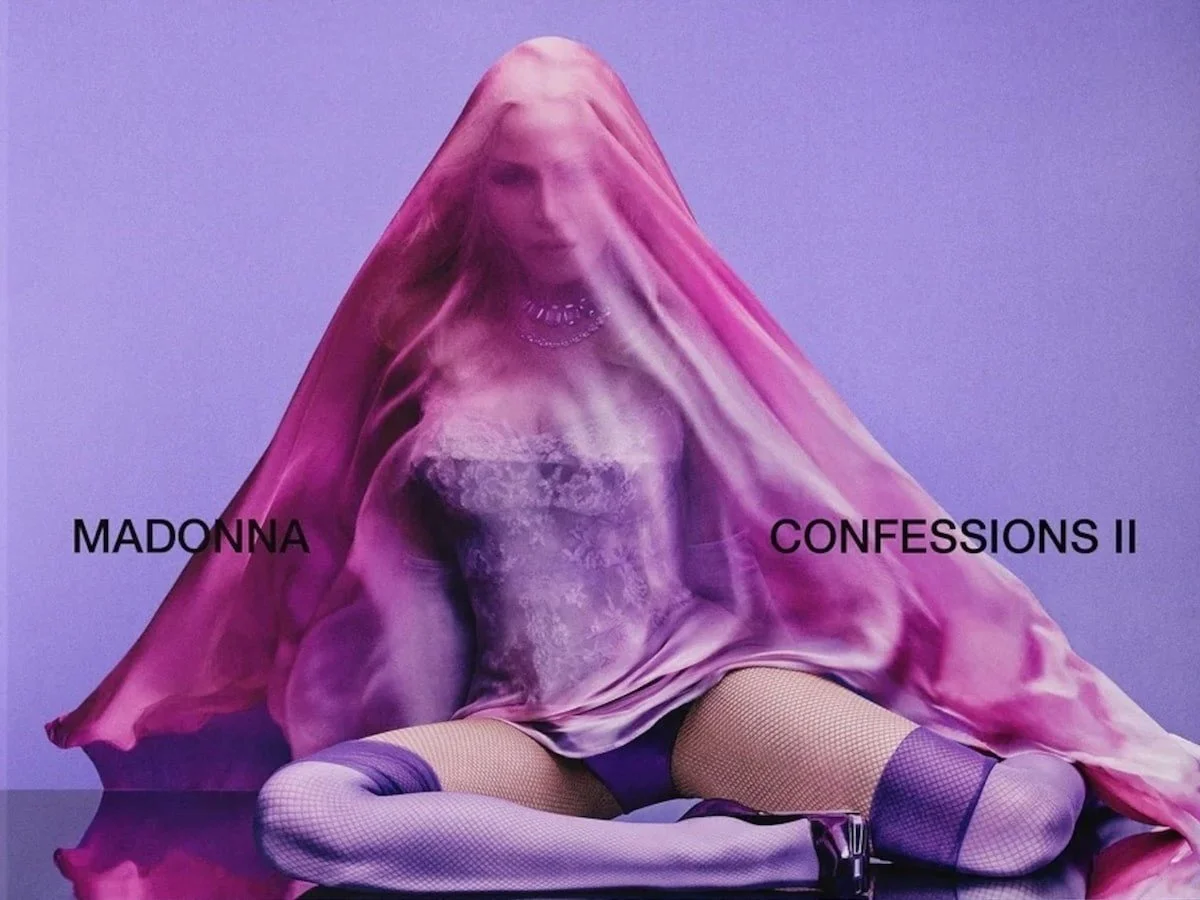
This image taken from the new promotional shots released this year for the upcoming launch of Confessions II
This year, Madonna feels present again. From her campaign with Dolce & Gabbana’s The One, to new musical releases, she is once more part of the cultural conversation. Her upcoming project, Confessions II, appears to revisit and reinterpret the sonic language she once redefined—this time through a house-inspired lens rooted in late 80s and early 90s influences.
The first track, I Feel So Free, carries a trance-like quality, building gradually, echoing fragments of her past while pointing toward something new. It feels familiar, yet forward-moving—like a conversation between eras.
As I reflect on these forty years, what stays with me is not the controversy, but the continuity of her impact. Madonna created space—for expression, for identity, for transformation. For many of us, she helped dismantle shame and replace it with possibility.
Today, discovering Madonna must feel different. The noise of controversy has softened, allowing her artistic contributions to come into clearer focus. What remains is the work itself—the music, the imagery, the message.
For those of us who grew up alongside her, she remains something more intimate: a constant, evolving presence. A reminder that identity is not fixed, that expression is power, and that reinvention is not only possible—it is necessary.
As she draws us back to the dancefloor this summer, I find myself returning with her—not just as a listener, but as someone who understands more deeply what she gave us.
Madonna has always made me hopeful.
Because, in the end, music makes the people come together
The Hidden Challenges of Learning Makeup
Makeup is a fascinating medium for self-expression; a tool that can enhance, modify, and in some cases, completely transform one’s appearance. As a form of empowerment, it has few equals.
It has never been as popular or as widely practiced as it is today. With the rise of social media, beauty and makeup have become more accessible than ever before. Yet within this flood of visual stimulation and influencer-driven culture, it can be surprisingly difficult to find advice and training that truly suit your individual features and needs.
Makeup is a fascinating medium for self-expression; a tool that can enhance, modify, and in some cases, completely transform one’s appearance. As a form of empowerment, it has few equals.
It has never been as popular or as widely practiced as it is today. With the rise of social media, beauty and makeup have become more accessible than ever before. Yet within this flood of visual stimulation and influencer-driven culture, it can be surprisingly difficult to find advice and training that truly suit your individual features and needs.
If you’ve followed the beauty industry for any length of time, you’ve likely noticed how quickly trends, techniques, and terminology evolve. What is fashionable one season may disappear the next. For someone interested in learning makeup seriously, it can be difficult to know where to begin.
Most likely, you’ve watched countless influencers — individuals who are dynamic, highly skilled in makeup techniques, and very knowledgeable when it comes to working on their own faces. However, their reality is that they are creating content for visibility, not building a curriculum designed to develop your skills.
Their objective is engagement: views, followers, recognition. The information they share is often shaped by that goal, rather than by a structured intention to educate.
For those whose passion draws them toward the cosmetics aisle, the opportunities for structured and meaningful education in makeup and skincare are actually quite limited.
The Aesthetic Route
Many aesthetic programs include some form of makeup training, ranging from basic to more elaborate techniques. However, these programs are often government-approved curricula that evolve very slowly. Many have remained largely unchanged for over twenty years — which, in the beauty industry, feels like an eternity.
Another important factor is that many instructors in aesthetic programs are not actively working makeup artists. They are often teachers of aesthetics who may be passionate about makeup, but who do not regularly work in the field. As a result, their experience with a wide range of skin tones, textures, and real-world conditions may be somewhat limited.
These types of programs tend to prepare students for basic beauty applications: retail environments, graduations, or simple bridal makeup. In many cases, the underlying objective is closely tied to product sales — encouraging clients to purchase multiple products.
In a retail context, this often translates into makeup routines that feel long, rigid, and overly structured — a sequence of precise steps designed to achieve a specific result. Yet most clients are simply looking for solutions that are practical, efficient, and suited to their lifestyle, time, and budget.
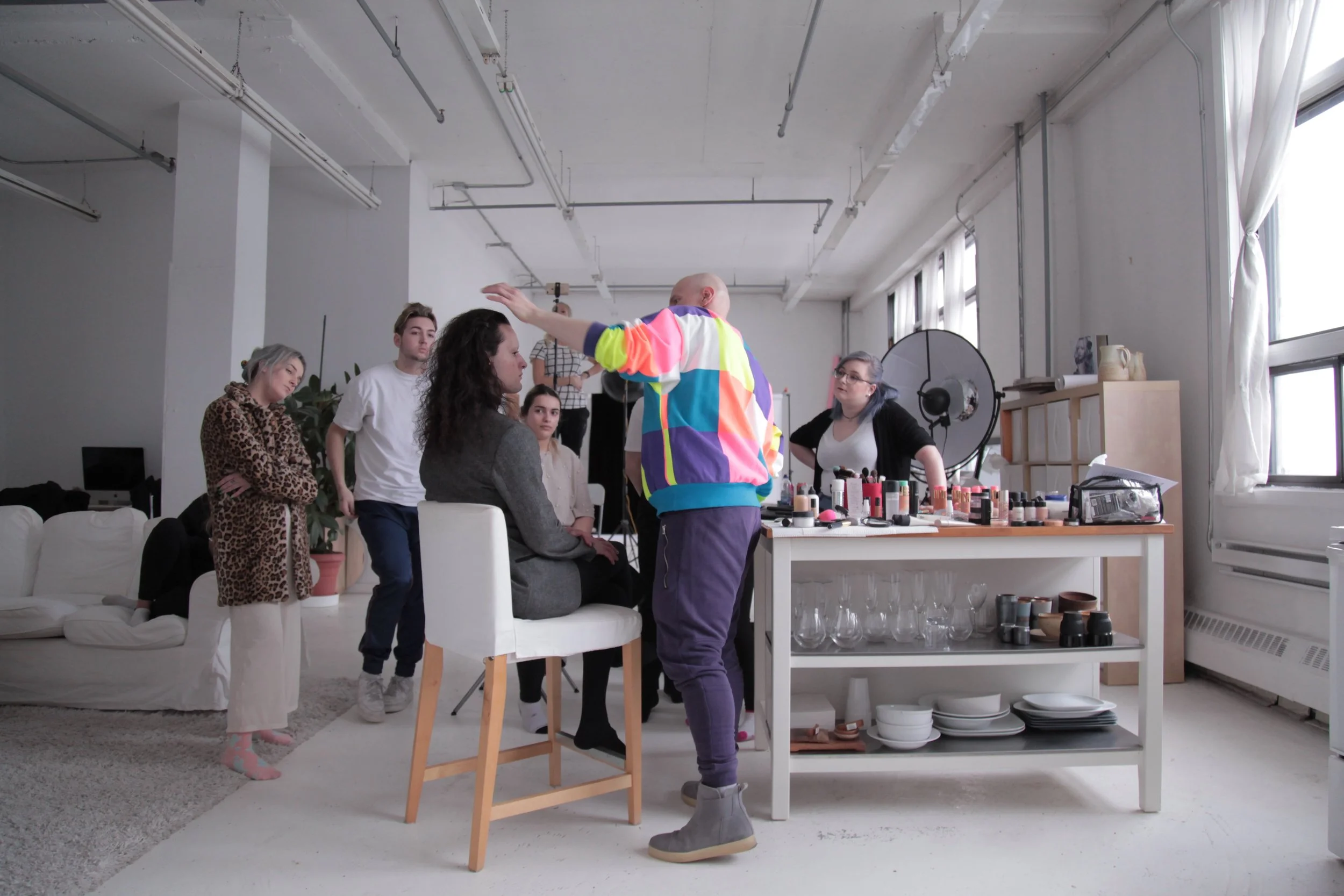
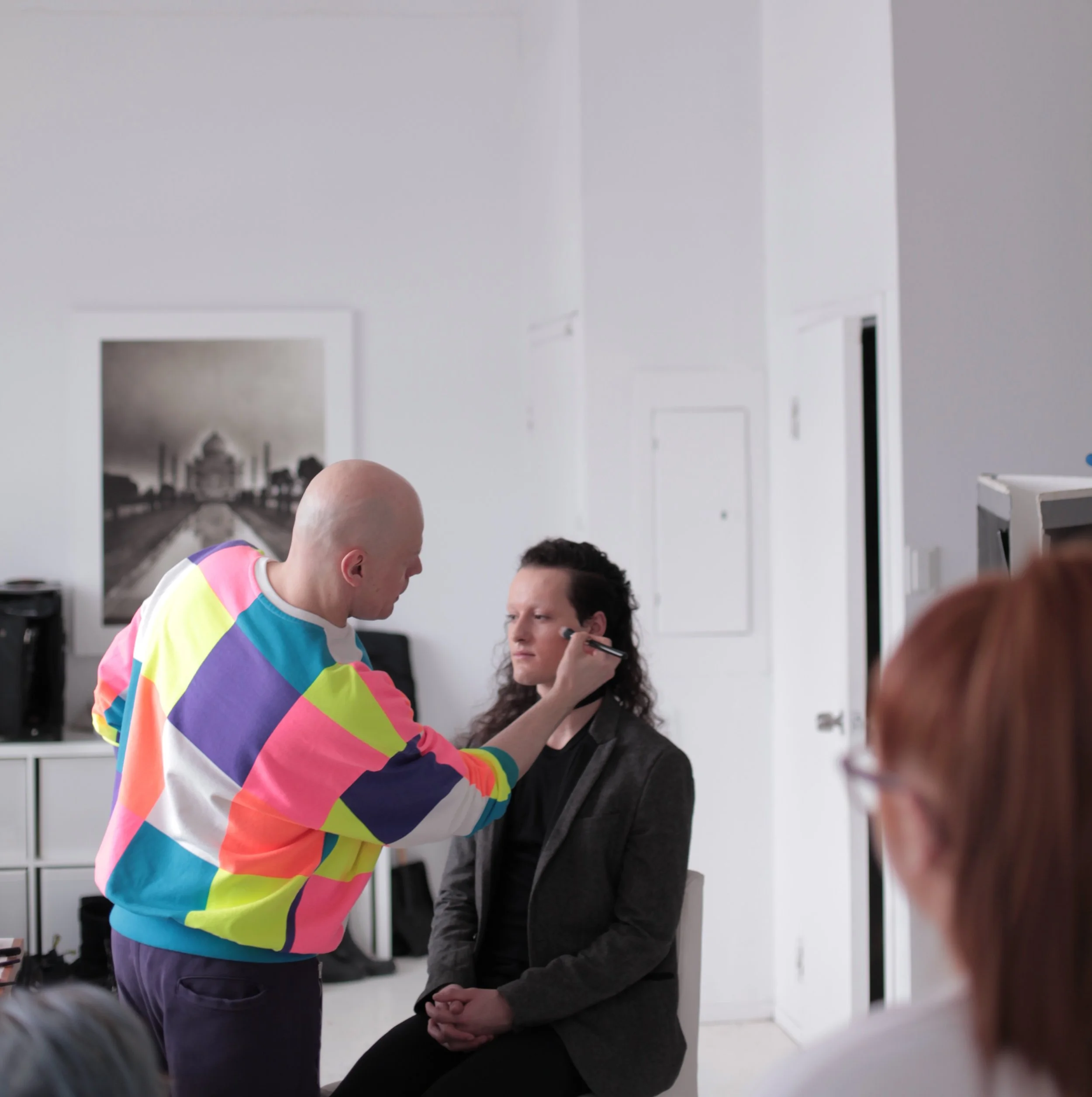
Teaching small groups of aspiring makeup artists, often the best way to learn.
The Artistry
True makeup artistry, however, goes much deeper than this.
It requires understanding not only the desired look, but also the context in which it will be seen. Who is wearing it? In what environment? Under what lighting? How can the look be adapted to suit the individual without compromising the artistic intention?
A skilled makeup artist learns to adapt. Day and night, natural refinement or dramatic expression, stage, in-person events, photography, and film all require different techniques and approaches. There is no universal formula. Everything must be tailored to the face in front of you.
Makeup artistry is not simply the application of color. It is about harmony — the balance between natural coloration, areas of discoloration, skin texture, facial structure, and the desired result.
A truly beautiful makeup does not mask the face. It enhances what is already there.
Private Institutions
There are, of course, private schools that offer valuable opportunities to study makeup artistry. These programs are often more specialized than aesthetic programs. However, they too can be affected by the slower pace of institutional change.
Updating a curriculum requires time, coordination, and financial investment. As a result, even programs that are closer to the current industry may not evolve as quickly as the beauty world itself.
Another characteristic of many programs is their rigid structure. Courses are divided into subjects, with a fixed number of hours assigned to each. The goal is to produce a well-rounded artist capable of performing a variety of techniques.
However, while students may be introduced to many skills, they often do not have enough time to truly master any of them.
More recently, I encountered an independent school that had taken the opposite approach — offering programs exceeding one thousand hours for a single course, with three separate programs available.
For someone who enjoys structured academic learning, this may be appealing. But in my experience, many makeup artists are creative individuals who struggle to remain engaged within such extended academic frameworks.
When Programs Close
For many years, I had the privilege of teaching in the Fashion & Beauty and Master Class makeup programs at LCI International’s Montreal campus. One of the strengths of that environment was the freedom the teaching staff had to adapt and update the curriculum.
This allowed us to remain highly responsive to industry changes and to prepare students for the realities of professional work, rather than an outdated approximation of it.
When these beauty programs closed, nearly forty years of makeup education in Montreal lost its foundation. This was particularly impactful for aspiring artists — a new generation suddenly found itself with fewer pathways to learn the craft and begin building a career.
During this transitional period, I taught in several aesthetic and private institutions. This allowed me to observe the current educational landscape more closely.
In one program, I was struck by how outdated the curriculum had become — older techniques, limited approaches, and teaching methods that separated clients into rigid categories, often without sensitivity or awareness of how this might be perceived.
At the same time, I taught within a ministerial vocational program. While students had access to a wide range of products, the structure was fragmented, the classes overcrowded, and there was often a noticeable resistance to learning. Although the program was accessible and free for local students, the overall quality of education remained inconsistent.
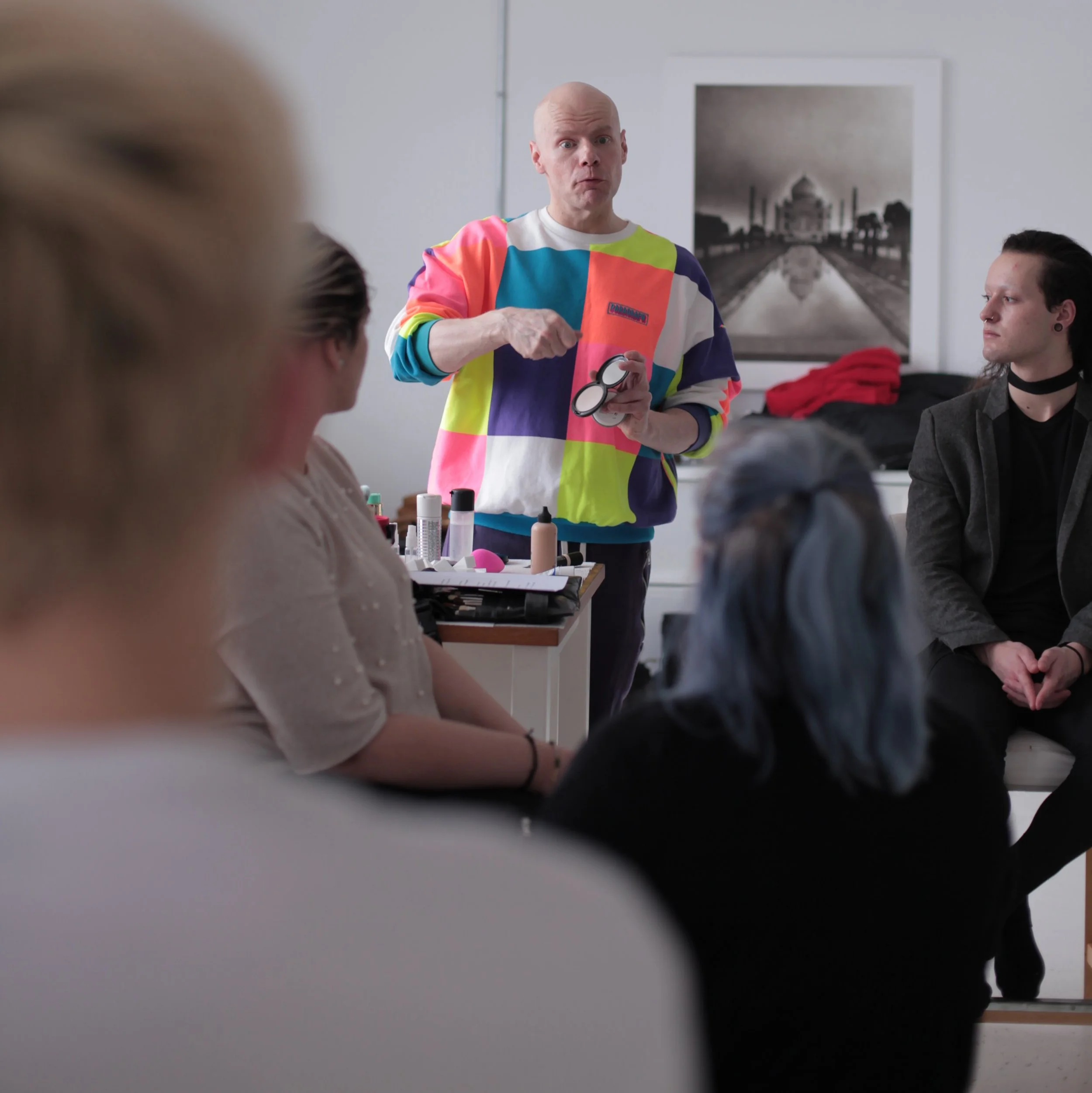
Teachers who bring passion and reason together, inspire more students.
Customized Learning
These experiences reinforced something I had already come to understand, there is a growing need for modern, professional makeup education — education that evolves alongside the industry.
This is one of the reasons I now offer private, customized mentorship, both online and in person.
With more than thirty years of experience in the beauty industry and over twenty years of teaching, I have developed a depth of knowledge that I take great pride in sharing with the next generation of artists.
And perhaps most importantly, I remain deeply passionate about makeup. Each face is a new canvas. Each product offers new creative possibilities. The craft continues to evolve, and that is part of what makes it endlessly engaging.
If you are interested in learning more about my mentorship programs, I invite you to reach out. I would be happy to guide you toward the skills and knowledge that will be most valuable for your personal or professional journey.
Whether your goal is to become a professional makeup artist or simply to learn techniques that are truly suited to your features and lifestyle, I can help you develop a personalized approach.
A strong education is not one-size-fits-all. It is built around the individual.