
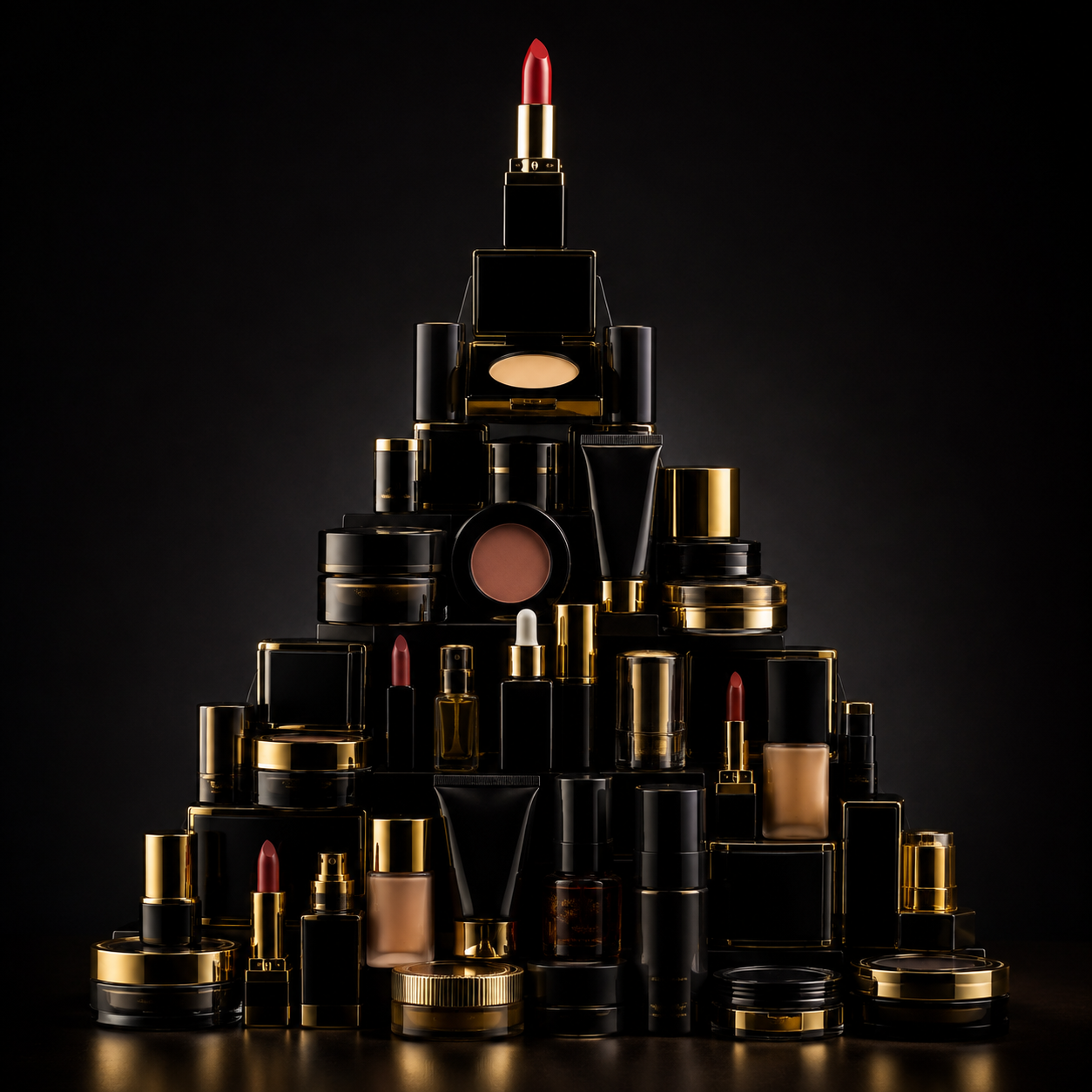
My Multi-Level Pyramid Problem
Nothing makes me happier as a teacher than seeing my students become successful in the field I introduced them to. And when a former student reaches out, I am always happy to reconnect, catch up, and hear where life has taken them.
Recently, a former student who has built a long-standing career for herself in the beauty world reached out, telling me she had something extremely exciting to share.
Nothing makes me happier as a teacher than seeing my students become successful in the field I introduced them to. And when a former student reaches out, I am always happy to reconnect, catch up, and hear where life has taken them.
Recently, a former student who has built a long-standing career for herself in the beauty world reached out, telling me she had something extremely exciting to share.
As the teacher who first introduced her to makeup, naturally I became excited. Perhaps she wanted to collaborate on an educational project. Maybe she wanted me to travel somewhere as a guest speaker. Within a few minutes, apparently I had already mentally accepted my Oscar.
The next morning, I answered her message, thanked her for reaching out, and asked what this exciting news was all about.
The exchange began innocuously enough: a few how-are-you’s, some catching up. Then she pivoted and asked whether I had heard of a beauty brand called Riman.
I had not.
She began telling me how much she loved the products, the colours and textures, how South Korean beauty continues to expand globally, and how well she had been doing financially selling the line. The company, she explained, was interested in expanding into my region, which naturally made her think of me.
As she was writing, I began researching the company myself.
And looking for the catch.
The product line appeared relatively straightforward, positioned at a fairly premium price point and frequently offered in bundled groupings. More importantly, the company operates through a multi-level marketing structure in which sellers can earn commissions on product sales and, potentially, through the recruitment and sales activity of other representatives.
This is where my heart sank.
I have always been deeply uncomfortable with this type of business model.
Not because selling products is inherently distasteful. I have worked in beauty for more than three decades. Selling, recommending and introducing products is part of the industry, I know the game well.
What troubles me is what happens when the people around you slowly begin to look less like friends, relatives, colleagues or former teachers—and more like potential customers.
Family. Friends. Lovers. Coworkers.
Everyone becomes a prospect.
And then we wonder why certain family members stop getting invited to events.
Multi-level marketing has existed in beauty for decades. Brands such as Mary Kay, Avon and Arbonne have all used variations of direct-selling or representative-based business models, and these structures have long generated debate about recruitment, market saturation, income potential and the pressure placed on personal networks.
I have been approached several times over the years to represent or sell companies operating this way. I have also watched friends invest substantial amounts of money into products that eventually sat untouched on shelves—unsold, unwanted, unloved and unnecessary.
What bothers me most, however, is the recruitment aspect.
The promise is often not simply that you can make money selling a product. The appeal becomes that you can bring other sellers into the structure and potentially benefit financially from their activity as well.
And that changes the nature of the interaction.
What bothered me about hearing from my former student was not simply being offered a beauty product. PR representatives offer me products regularly; that is part of my professional life.
What bothered me was realizing that a relationship I associated with mentorship, history and genuine affection had become the doorway to a commercial opportunity.
Perhaps she sincerely thought of me because she believed I would be good at it. I am willing to give her that generosity.
But that is also exactly what troubles me about this type of business model: it encourages people to look at their relationships and see potential markets.
I cannot begin to describe how strange it felt to have a former student approach me with an opportunity from which she might ultimately benefit financially, knowing that it was my own knowledge, patience and teaching that had helped introduce her to this industry in the first place.
The gall. The gumption.
And, admittedly, the irony.
I understand the temptation. We live in a world where everyone is trying to do too much yesterday, increase their revenue, maximize their time and create additional streams of income.
I am trying to do exactly the same thing.
But there must be ways to generate revenue without cannibalizing our social circles and turning every person we know into a potential client.
In the end, I politely declined.
I told her that I was happy she had found something that worked for her, but that I was not interested in investing in another beauty brand.
Right now, I need to invest in myself.
And since we were apparently discussing professional opportunities, I asked whether she might be willing to write a testimonial about her experience studying with me.
She very kindly said yes.
At the time of writing, I am still waiting.
Perhaps there is a lesson in that too.
Live to Tell: How Madonna Taught Me to Express Myself
This Fire Horse year feels rich with milestones. Beyond reaching my own mid-century mark, I am also celebrating forty years since I first discovered Madonna. At the time, I could never have imagined that this woman would help shape my beliefs, my sense of self, and my understanding of expression—teaching me not only to speak for myself, but also to stand up for those less heard.
Madonna’s voice called to me. There was something in her tone, her message, her presence that felt immediate and magnetic. She was a chameleon—constantly transforming—where performance art met pop mythology, creating something timeless and ever-evolving.
This Fire Horse year feels rich with milestones. Beyond reaching my own mid-century mark, I am also celebrating forty years since I first discovered Madonna. At the time, I could never have imagined that this woman would help shape my beliefs, my sense of self, and my understanding of expression—teaching me not only to speak for myself, but also to stand up for those less heard.
Madonna’s voice called to me. There was something in her tone, her message, her presence that felt immediate and magnetic. She was a chameleon—constantly transforming—where performance art met pop mythology, creating something timeless and ever-evolving.
I was ten years old. My father had already introduced me to the golden age of Hollywood, and I had developed a deep fascination for Marilyn Monroe. Then Madonna released Live to Tell.
The song—composed by Patrick Leonard and Madonna herself—was haunting in its simplicity. Its long instrumental passages created a hypnotic atmosphere that drew me in completely. I remember asking my mother to take me to the record store so I could buy the cassette maxi-single. I played it endlessly, listening to every version, over and over again, completely entranced.
Live to Tell, a still, from the video, released in 1986
That same summer, during one of our annual visits to my aunt and uncle, I found True Blue at the Eaton Centre in Toronto. That moment deepened something—what had been fascination became attachment. A bond was forming.
Even though my mother and aunts didn’t share my enthusiasm, they couldn’t resist the melodic perfection of La Isla Bonita. That song, with its Spanish influences, hinted at something broader—Madonna’s ability to blend cultures and sounds into something universally compelling.
By the time I turned thirteen, Like a Prayer arrived, along with its controversy. The imagery, the themes, the boldness—it marked a shift. Madonna was no longer simply a pop star; she was a cultural force, using her platform to provoke, question, and expand boundaries.
Her tours became legendary—spectacles of choreography, staging, fashion, and narrative. Blonde Ambition in particular redefined what a pop concert could be. It wasn’t just performance; it was theatre, architecture, and storytelling combined.
Then came Truth or Dare in 1991. Looking back, it feels like the quiet birth of reality television—but more importantly, it was a turning point in representation. For those of us beginning to understand our identities, especially within the LGBTQ+ community, it was profound. We saw people like ourselves—unapologetic, expressive, human—occupying space without shame.
She wasn’t just entertaining us. She was fighting for visibility.
With Vogue, she elevated an underground queer dance form into global consciousness. With Express Yourself, she delivered one of her clearest messages: autonomy, power, self-definition. Her visuals—drawing from Metropolis and other provocative references—transformed the music video into a true artistic medium.
Madonna’s work was always both auditory and visual. She created personas, narratives, entire worlds. She provoked, she challenged, she seduced—and in doing so, she kept the public simultaneously captivated and unsettled.
Of course, controversy followed her. Sometimes it was organic, sometimes deliberately crafted—it was part of her language. The Sex book and the Erotica era pushed boundaries further than audiences were ready for, overshadowing the depth of the music at the time. And yet, decades later, that work is being re-evaluated with a new appreciation.
The years that followed brought some of her most refined work: Bedtime Stories, the luminous Ray of Light, the confident energy of Music. Even her role in Evita stands as a testament to her discipline and ambition.
There were missteps, of course—American Life being one of the most polarizing—but even then, the accompanying Re-Invention Tour demonstrated her ability to recalibrate and reassert her artistic identity.
In 2005, Confessions on a Dancefloor arrived—a masterclass in cohesion and rhythm. It reintroduced disco to a new generation, seamlessly blending nostalgia with modern production.
More recent years have been uneven, shaped by leaks, evolving production processes, and shifting collaborations. And yet, even within that, Madame X revealed flashes of experimentation and creative risk—proof that her instinct to explore remains intact.
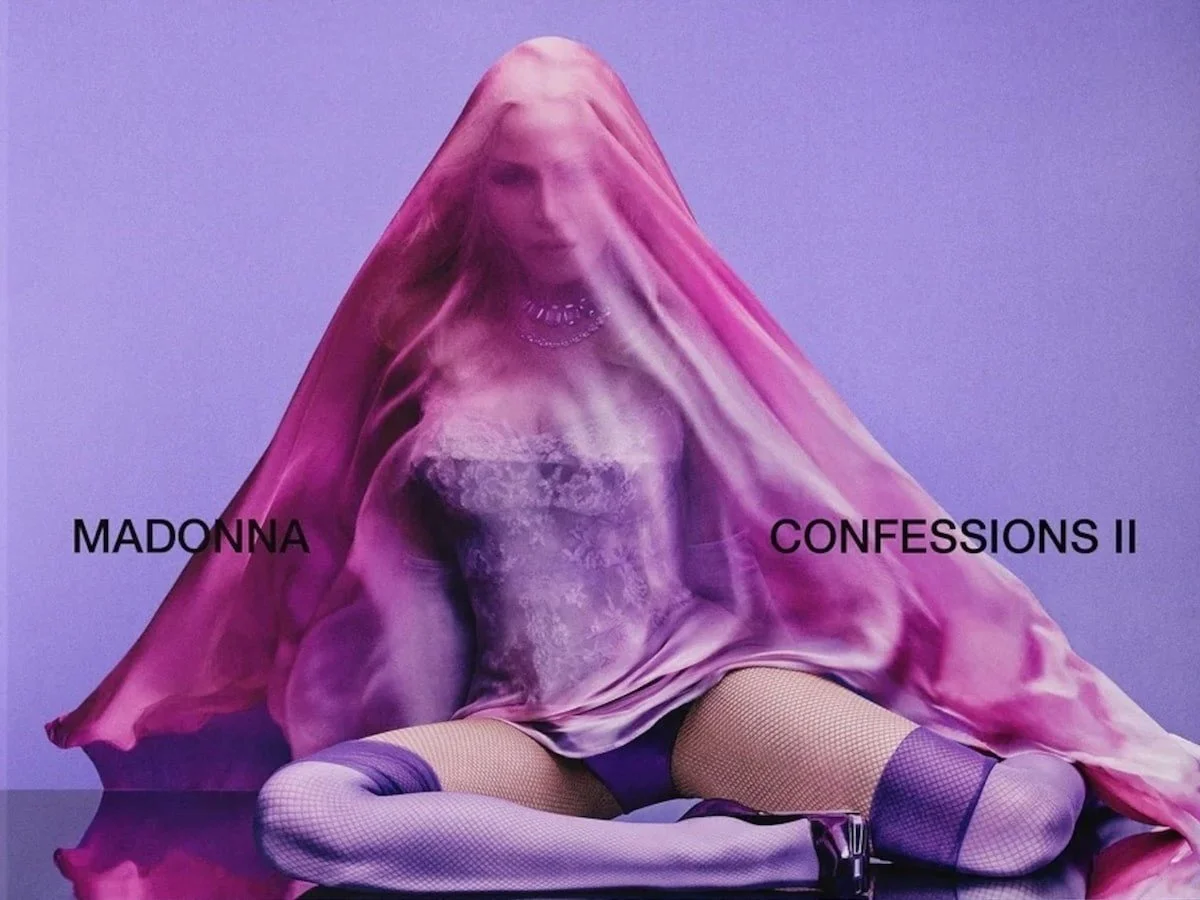
This image taken from the new promotional shots released this year for the upcoming launch of Confessions II
This year, Madonna feels present again. From her campaign with Dolce & Gabbana’s The One, to new musical releases, she is once more part of the cultural conversation. Her upcoming project, Confessions II, appears to revisit and reinterpret the sonic language she once redefined—this time through a house-inspired lens rooted in late 80s and early 90s influences.
The first track, I Feel So Free, carries a trance-like quality, building gradually, echoing fragments of her past while pointing toward something new. It feels familiar, yet forward-moving—like a conversation between eras.
As I reflect on these forty years, what stays with me is not the controversy, but the continuity of her impact. Madonna created space—for expression, for identity, for transformation. For many of us, she helped dismantle shame and replace it with possibility.
Today, discovering Madonna must feel different. The noise of controversy has softened, allowing her artistic contributions to come into clearer focus. What remains is the work itself—the music, the imagery, the message.
For those of us who grew up alongside her, she remains something more intimate: a constant, evolving presence. A reminder that identity is not fixed, that expression is power, and that reinvention is not only possible—it is necessary.
As she draws us back to the dancefloor this summer, I find myself returning with her—not just as a listener, but as someone who understands more deeply what she gave us.
Madonna has always made me hopeful.
Because, in the end, music makes the people come together

The Politics of Pretty: How Social Engineering Shapes Your Face
Are your beauty standards truly yours, or were they curated, molded, engineered into desires, subtly manipulating and influencing your choices and beliefs?
Societal beliefs are influenced and shaped by the politics of our time, the institutions which direct us, the media that stimulates and persuades us to think in certain ways. Facebook encouraged us to share our lives online, Instagram imposed heavily filtered faces as the new beauty standard in the 2010s.
TikTok made everyone a 30-second soundbite, peddling products purely for profit. AI made image creation almost effortless — with archetypes, presets, and styles to choose from. Avatars are the new reality.
Are your beauty standards truly yours, or were they curated, molded, engineered into desires, subtly manipulating and influencing your choices and beliefs?
Societal beliefs are influenced and shaped by the politics of our time, the institutions which direct us, the media that stimulates and persuades us to think in certain ways. Facebook encouraged us to share our lives online, Instagram imposed heavily filtered faces as the new beauty standard in the 2010s.
TikTok made everyone a 30-second soundbite, peddling products purely for profit. AI made image creation almost effortless — with archetypes, presets, and styles to choose from. Avatars are the new reality.
Not to mention the many cosmetic companies feeding off the psychological insecurities of millions of people globally, seeking to elevate their standard, increasing their beauty currency.
Let’s navigate together down this fascinating rabbit hole, seeking the architects of the beauty matrixes we all aspire to.
🕰 Let’s Jump Back In Time
In Ancient Egypt, beauty was a divine obligation — order, symmetry, and ritualistic grooming reflected social class and spiritual favor. Your eyeliner wasn’t just aesthetic; it was symbolic protection, a ritual of power and status. This was not self-expression — it was a structured code, affirming your place in the world.
The Ancient Greeks went further — equating beauty with moral superiority. Philosophers like Plato and Aristotle linked outer beauty to inner virtue, reinforcing nationalist ideals. The beautiful were “good,” the barbaric were “other.” The ideal was the Greek male form, symmetrical and glorified, while the female body was seen as seductive, unstable, a mystery to be controlled.
The Romans borrowed from the Greeks but emphasized spectacle. Beauty became political theatre. Makeup, jewelry, and wigs distinguished class, while the “overdone” look was relegated to sex workers and slaves — a class distinction painted directly onto the face. The message was clear: your appearance reveals your worth.
By the 18th century, France had turned beauty into costume. Rouged cheeks, powdered faces, elaborate wigs — the aristocracy performed their excess while the peasantry scraped by. The French Revolution wasn’t just political — it was aesthetic. Heads rolled, and so did the powdered wigs. Beauty had gone too far — and the people knew it.
👁🗨 Who is the Architect?
Different periods have different architects.
In Ancient Egypt, the clergy and royal houses defined beauty.
In the Renaissance, painters and popes sculpted ideals of divine proportion.
In the 20th century, magazine editors, designers, and Hollywood directors took over.
Now? Influencers, tech moguls, and algorithmic feedback loops shape your mirror image.
There is no single mastermind. Rather, there are opportunists.
Waves of innovators — or exploiters — who sense cultural shifts and leap in with a product, a look, a filter, a filler. With a well-lit selfie and the right hashtag, a beauty standard can be born overnight.
And behind the curtain?
Marketing firms fine-tuning copy that hits you where it hurts.
Ad agencies tracking your online behavior to whisper suggestions into your subconscious.
Plastic surgeons ready with the before-and-after gallery.
Brands selling both the wound and the cure.
🧬 The New Tools of Control
In the 21st century, beauty is shaped less by paint and more by pixels.
Language frames the narrative: “flawless,” “clean,” “anti-aging,” “glass skin,” “snatched.”
Apps enforce the aesthetic: Facetune, filters, skin-smoothing presets — beauty on demand.
AI creates faces that don’t exist but somehow still make us feel inadequate.
Algorithms reward sameness — pushing the same sculpted jawlines, arched brows, pillowy lips.
Even more insidious is how these standards claim diversity while enforcing conformity.
One “natural” look, one “inclusive” foundation range, one narrow definition of what is “timeless beauty” — stretched across millions of faces.
We're not just consuming beauty anymore — we’re being consumed by it.
🔥 Cracks in the Mirror: Resistance and Rebellion
But all is not lost.
Throughout history, beauty’s rules have been broken — by rebels, artists, outsiders, and survivors.
Drag artists have mocked, subverted, and elevated beauty to performance art.
Punks and goths rejected the mainstream aesthetic, painting their rage on their faces.
The natural hair movement, body positivity, aging-with-pride — all push back against the tyranny of “perfect.”
Makeup artists, content creators, and real people around the world are reclaiming their image — scars, wrinkles, texture, gender, and all.
The new beauty revolution isn’t about erasing flaws — it’s about erasing shame.
🔮 The Future: Synthetic Faces & Selective Realities
As AI deepfakes become indistinguishable from humans, as CRISPR edges toward editing our actual DNA, and as the Metaverse promises customizable avatars with zero pores… the question becomes:
Will we even recognize beauty as something human anymore?
What happens when your selfie isn't you?
When your child is genetically preselected for symmetry?
When filters become expectations and reality becomes negotiable?
This isn’t just about mascara.
This is about identity, autonomy, and the right to define yourself outside of engineered desirability.
🪞 Conclusion: Beauty Was Built — Now Rebuild It
Beauty was never just aesthetic. It was always architecture — of power, class, control, aspiration, and identity. It was drawn in eyeliner, written in pigment, encoded in algorithms.
But if beauty was built, it can be rebuilt.
You don’t have to delete your filters or toss your lip gloss. You simply need to choose — consciously, rebelliously, joyfully — which standards you accept, which ones you discard, and which ones you redefine.
Because the most revolutionary act in a world built on engineered beauty…
…is to decide for yourself what beautiful means.