

Blemish Myth-Busters & Breakthroughs
One of the most prized attributes in beauty is skin that is clear, radiant, and even in color.
We are constantly surrounded by images of impeccable complexions, quietly reminding us of the cultural value placed on “perfect” skin. For anyone who has lived with acne or recurring breakouts, this is an inescapable reality — one that’s hard to ignore.
There is a stigma attached to blemish-prone skin, as though it were unclean or neglected. Otherwise, why would it show whiteheads, blackheads, pustules, and inflammation on its surface?
Many people still believe acne is merely a passing phase of adolescence, not realizing that adult acne is a real and persistent condition that can extend well beyond puberty.
Editor’s Note:
This piece isn’t written from expertise alone, but from lived experience. It’s a reflection on what it means to carry blemishes — on the skin and in the mind — and on the slow, patient work of learning how to care for both.
Clear Skin is Always In
One of the most prized attributes in beauty is skin that is clear, radiant, and even in color.
We are constantly surrounded by images of impeccable complexions, quietly reminding us of the cultural value placed on “perfect” skin. For anyone who has lived with acne or recurring breakouts, this is an inescapable reality — one that’s hard to ignore.
There is a stigma attached to blemish-prone skin, as though it were unclean or neglected. Otherwise, why would it show whiteheads, blackheads, pustules, and inflammation on its surface?
Many people still believe acne is merely a passing phase of adolescence, not realizing that adult acne is a real and persistent condition that can extend well beyond puberty.
How Acne Makes You Feel
Having acne has always been a daily reality for me — managing my skin with the same intensity that bodybuilders apply to training, diet, and repetition.
I’ve tried every acne-fighting ingredient, every dietary tip, supplement, and treatment in the hope of making this persistent inflammation disappear for good.
Here’s what I know to be true after years of experience:
Acne doesn’t just affect your skin — it can quietly reshape how you see yourself. One single blemish can dominate my entire reflection. When I look in the mirror, it feels as though it’s leaping forward, demanding all of my attention. It becomes the only thing I see.
I’m aware this perception is distorted. While I focus on inflammation and redness, others may be noticing my eyes, my skin’s natural glow, or the way I move through the world. But in that moment, all I see is the redness — the persona non grata on my face that must exit as soon as possible to restore my peace of mind.
Acne, breakouts, and inflammation can make you feel deeply self-conscious and less attractive. For some, it becomes a true confidence killer. I’ve canceled events and social gatherings simply because I couldn’t bear to look at myself in the mirror — and didn’t want anyone else to look at me either.
Time and Discoloration
Blemishes can rise and flare quickly, but they often take much longer to leave. As the inflammation subsides and the surface flattens, what remains is often a darkened mark — a reminder that can linger far longer than the breakout itself.
When I was younger, I could rely on discoloration fading within a month. Now, it can take anywhere from 60 to 100 days, and some marks remain visible for six to nine months.
Regeneration cycles slow with age — that’s simply biology. I accept it. I just don’t always love what it means for my skin.
Scars and Indentations
Acne can also lead to long-term scarring — deep indentations where layers of the epidermis have been damaged and heal unevenly.
These scars change how light moves across the face. The skin can lose radiance, feel dry, and appear shadowed and uneven. Makeup becomes more complex, as textured skin doesn’t naturally reflect luminosity. Instead of glow, the surface can feel flat, matte, and less alive.

What you put in your body, ends up on your face; choose wisely!
What Breakouts Are Signaling from Inside
Whenever I let my diet drift — more processed foods, more sugar, high carbohyrates, and heavy dairy — my skin responds immediately. Loudly.
Once I remove those triggers, I see less inflammation and a more even complexion. It’s a clear reminder that what we eat and how we process it is reflected through the skin.
If the liver is under strain, the skin often becomes one of the first visible messengers.
Let’s Bust the Biggest Myth
Most people I meet who struggle with acne have one thing in common: they avoid moisturizing.
Many have oily skin and fear that hydration will make it worse — especially if they’re already using topical treatments designed to dry out inflammation.
What actually happens is the opposite.
When the skin becomes dehydrated, the sebaceous glands respond by producing even more oil to protect the surface. That excess sebum spreads across the skin, increasing congestion and the likelihood of breakouts.
The skin needs moisture. Proper hydration helps maintain the skin’s natural moisturizing factors and, over time, encourages the sebaceous glands to produce less oil, not more.
For anyone dealing with acne, finding a non-comedogenic moisturizer that supports the skin barrier is one of the most important steps you can take.
One of my long-standing, no-nonsense favorites is CeraVe’s Moisturizing Lotion for Dry and Normal Skin — fragrance-free, lightweight, affordable, and rich in ceramides. It absorbs quickly, doesn’t feel greasy, and is safe for both face and body.
The Usual Blemish-Fighting Ingredients
For years, I relied on the classics: salicylic acid and benzoyl peroxide.
Salicylic acid penetrates deep into the pores to clear debris, while benzoyl peroxide helps reduce bacteria and dry out active blemishes.
Both are effective — and both can be harsh.
The most common mistake among acne sufferers is overuse. Instead of healing the skin, these ingredients can weaken the barrier and increase sensitivity.
My own skin eventually began to reject them. What once worked beautifully started causing irritation and inflammation, forcing me to step away.
The same happened with retinol — often considered the gold standard for anti-aging and acne. It accelerates cell turnover, stimulates collagen, and can dramatically improve clarity and texture.
But retinol is powerful. It requires moderation — usually no more than two to three nights per week — and isn’t well tolerated by skin prone to rosacea or sensitivity.
After nearly six years of luminous results, my skin began to resist it too. That one was hard to let go.
My Newest Allies in Blemish Control
Recently, I discovered azelaic acid — an ingredient that fights inflammation and redness while remaining gentle enough for sensitive skin. It also supports collagen production, helping the skin repair itself where blemishes have appeared.
If you’re curious, I’ve shared detailed reviews of the azelaic acid products I find both effective and cost-conscious. Read the previous blog, here.
When I saw that The Ordinary had launched two new blemish-focused products that didn’t rely on salicylic acid, benzoyl peroxide, or retinol, I was immediately intrigued.
I tested both — and they delivered.
Balancing & Clarifying Serum
This formula uses a derivative of azelaic acid called Potassium Azeloyl Diglycinate, known for calming inflammation and regulating oil production.
What makes this serum unique is its regulatory approach to acne. Instead of aggressively drying the skin, it works by biologically balancing oil production (Carnitine, Sarcosine), calming inflammation and discoloration (Potassium Azeloyl Diglycinate, Acetyl Glucosamine), and strengthening the skin’s natural defense systems (Lactococcus Ferment Lysate, Ectoin, Adenosine). This makes it particularly well-suited for sensitive, adult, or chronically acne-prone skin that needs long-term stability rather than short-term correction.
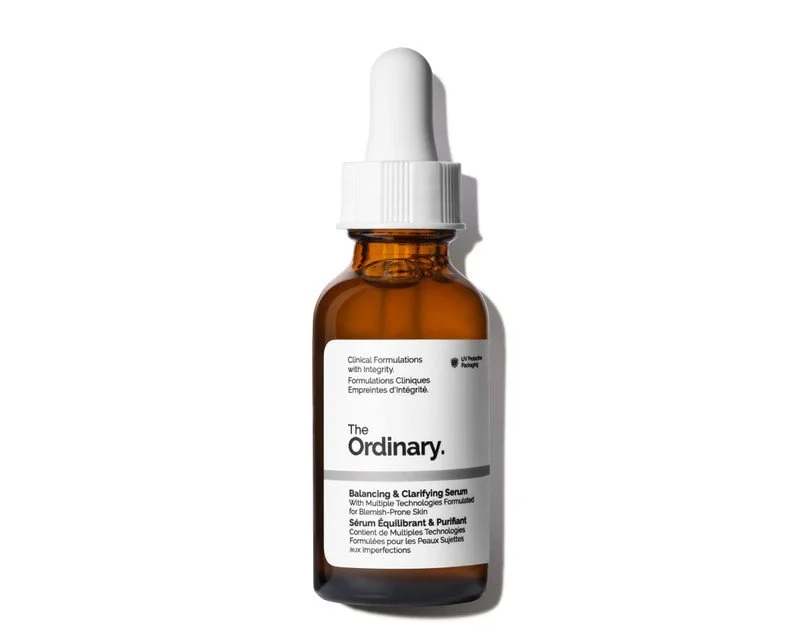
An amazing serum for anyone suffering from adult acne.
Sulfur 10% Powder-to-Cream Concentrate
This product takes a more direct, treatment-focused approach.
This sulfur-based concentrate clears clogged pores and reduces acne-causing bacteria at the surface, while Levocarnitine helps regulate oil production within the pore itself. Niacinamide balances this intensity by calming inflammation, strengthening the skin barrier, and improving post-acne tone. Together, they create a dual-action system designed for active breakouts and congested skin rather than long-term, whole-face regulation.
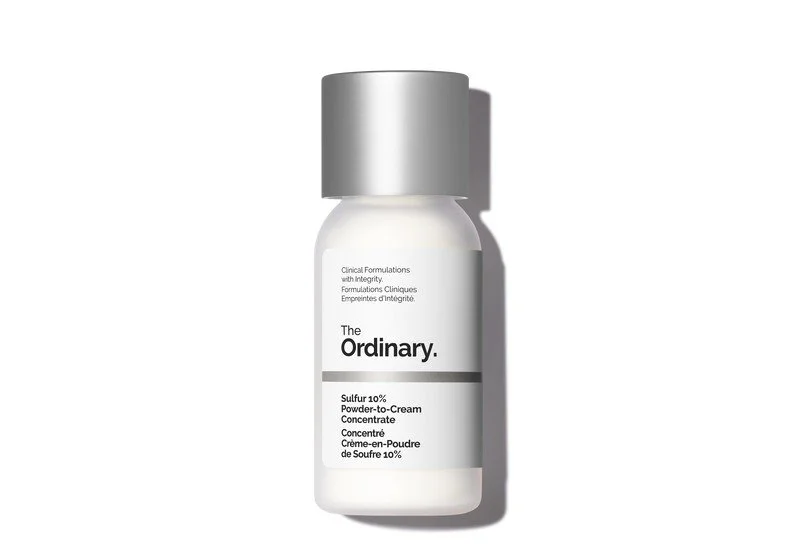
This powder calms inflammation instantly!
Finding Balance Again
Between these newer launches and my ongoing work with azelaic acid, I’ve finally found a way to balance my complexion while keeping congestion under control.
What’s become crystal clear to me is this:
Fighting breakouts is as much about what we put into our bodies as what we put onto our skin.