
Civility is the Core of Civilization
"Civilization is not sustained by extraordinary acts of heroism. It is sustained by millions of ordinary acts of consideration."
A few weeks ago, I was riding the bus home mid-afternoon. It was a bright, sunny day, the bus half-empty, and the ride unusually peaceful. Most people were quietly absorbed in their phones. There was plenty of room, and although no one was overtly friendly, an unspoken sense of ease settled over the bus as we moved along our route.
That quiet atmosphere changed abruptly when the bus stopped and a group of children of varying ages, accompanied by several young adults supervising them, climbed aboard. The sudden burst of voices and movement transformed the mood in an instant.
I was seated near the rear exit, occupying a single seat with my walking stick resting in my hand. Years of work have left my knee permanently damaged, and remaining seated makes public transit considerably safer and more comfortable for me.
In many ways, I represented the very person depicted by the accessibility icon displayed throughout public transit: someone with a mobility aid. Along with the elderly, pregnant women, and those recovering from illness or surgery, people using a walking stick are precisely the passengers those priority seats were designed to protect.
A young boy approached me and gestured for me to leave my seat. He could simply have taken the empty seat beside me. Instead, he directed me out of mine.
I quietly lifted my walking stick and tapped it three gentle times against the floor before calmly explaining that I needed the seat for my own safety.
He proceeded to throw himself into the seat beside me. His heavy backpack slammed into my side. The monitors immediately turned their attention to him, asking whether he was alright. No one apologized. No one acknowledged that I had just been struck.
They continued checking in with the young boy several times afterward, occasionally casting disapproving glances in my direction, as though by simply speaking up for myself, I had somehow become the disturbance.
I soon realized this was a day camp for children with special needs. As a teacher, an uncle, and someone who has had personal experience with children with special needs, I understand the challenges inherent in managing such a group in a public setting. I have genuine empathy for the responsibility those supervisors carried.
Yet the encounter illuminated something much larger than a disagreement over a bus seat. It revealed what I believe to be one of the quietest, yet most significant, changes taking place in our society: the gradual erosion of civility, the invisible glue that allows strangers to share space with dignity, mutual respect, and quiet consideration.
Civilization has always depended on a delicate balance between individual freedom and collective responsibility. Today, however, we seem to celebrate personal success far more loudly than our shared obligation to care for one another.
Yet no civilization has ever endured through individual achievement alone. It is sustained by our willingness to protect those who are most vulnerable and to recognize that the strength of a society is measured not only by what it builds, but also by whom it chooses to care for.
Community becomes civilization when we accept a simple truth: we are responsible for one another. We become stronger when we create environments where the elderly, the infirm, children, and those facing hardship are able to participate safely and with dignity.
Ultimately, civility is far more than a collection of polite gestures. It is an expression of compassion, respect, and love made visible through our everyday actions. It is our quiet willingness to become the most generous version of ourselves, even when no one is watching.
In a culture where algorithms often reward outrage over understanding, division over dialogue, and conflict over cooperation, how do we restore the cultural value of civility? How do we bring these quiet social virtues back into everyday life, so they strengthen our communities at a time when trust in institutions is eroding and the common thread that binds society together seems increasingly fragile?
There is a familiar expression: it takes a village to raise a child. Behind those few words lies an unwritten social contract. Living together means that we constantly influence one another. Through countless small interactions, we shape each other's habits, expectations, and ultimately, the culture we create together.
Which brings me to the small, unsung acts of kindness that quietly weave our social fabric together.
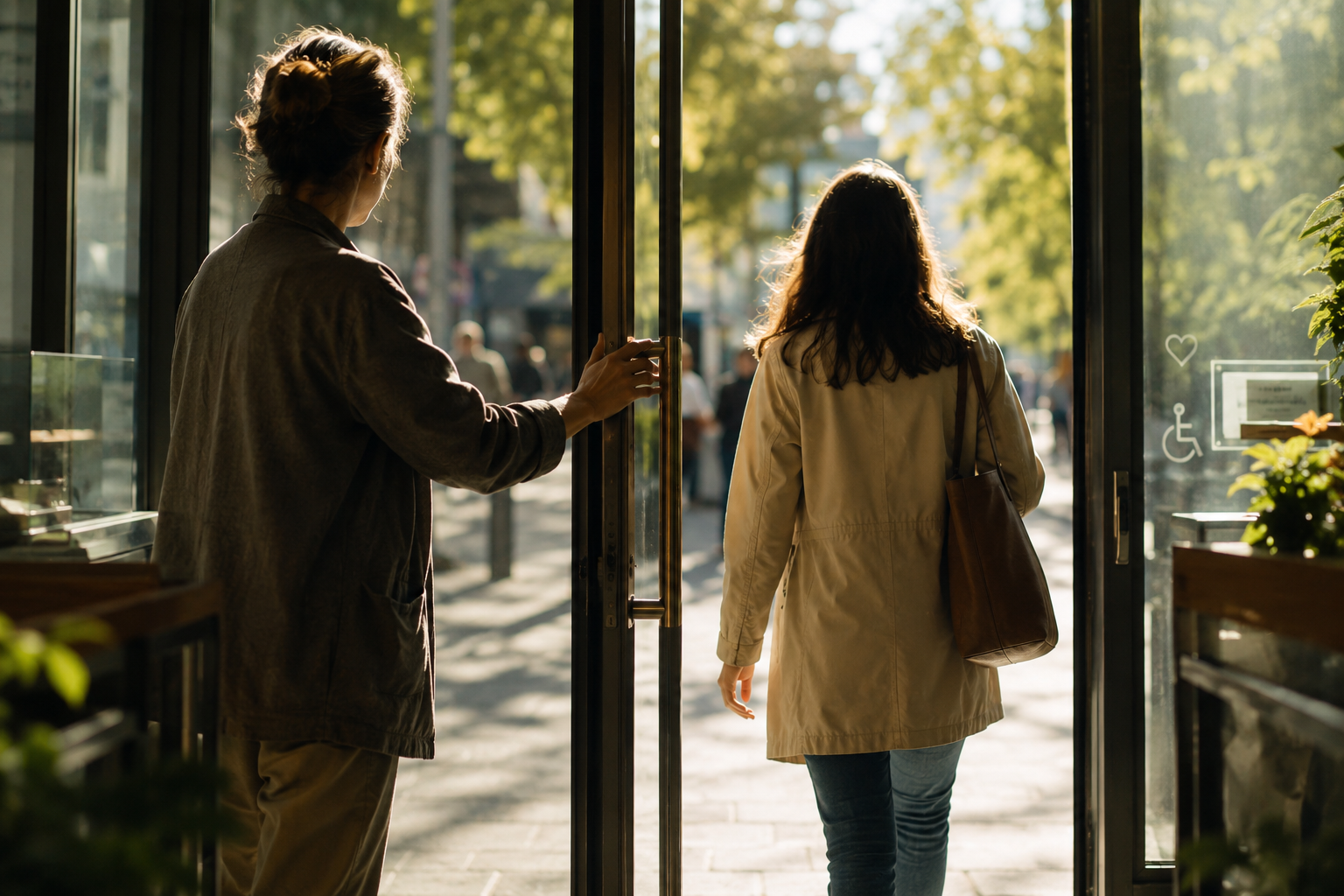
Holding a door open for someone else.
Using headphones while listening to your favorite content on public transit.
Allowing the elderly, someone with limited mobility, or a parent with young children to go before you.
Offering your seat to someone who needs it more than you do.
Waiting your turn.
Lowering your voice in shared public spaces.
Listening without interrupting.
Cleaning up after ourselves.
None of these actions will ever make the evening news. Yet together, they are the quiet acts that hold civilization together.
When they begin to disappear, the social contract slowly starts to fray. Shared spaces become less pleasant, less welcoming, and eventually, less safe.
Choosing to follow an unwritten code of mutual respect allows everyone to experience a greater sense of safety. And where people feel safe, they are free to exist without constant anxiety or fear.
Now, I remain both hopeful and realistic. I am not expecting everyone to suddenly hold hands, forgive every grievance, and sing Kumbaya into the sunset in some fairy-tale ending.
What I do believe is that we owe one another the kindness of gentle correction whenever it is needed. We should not be afraid to teach civility, to model it ourselves, and to help elevate our collective standards so that we can begin reweaving the unwritten social contract that binds us together.
Oddly enough, we must make civility feel aspirational again—something worthy of admiration, something worth practicing, an ideal that genuinely improves the lives of everyone around us.
Civilization is not sustained by extraordinary acts of heroism.
It is sustained by millions of ordinary acts of consideration that quietly tell another human being,
"You matter too."
Because ultimately, civility is not the suppression of freedom.
It is what allows freedom to exist in shared spaces.