
Live to Tell: How Madonna Taught Me to Express Myself
This Fire Horse year feels rich with milestones. Beyond reaching my own mid-century mark, I am also celebrating forty years since I first discovered Madonna. At the time, I could never have imagined that this woman would help shape my beliefs, my sense of self, and my understanding of expression—teaching me not only to speak for myself, but also to stand up for those less heard.
Madonna’s voice called to me. There was something in her tone, her message, her presence that felt immediate and magnetic. She was a chameleon—constantly transforming—where performance art met pop mythology, creating something timeless and ever-evolving.
This Fire Horse year feels rich with milestones. Beyond reaching my own mid-century mark, I am also celebrating forty years since I first discovered Madonna. At the time, I could never have imagined that this woman would help shape my beliefs, my sense of self, and my understanding of expression—teaching me not only to speak for myself, but also to stand up for those less heard.
Madonna’s voice called to me. There was something in her tone, her message, her presence that felt immediate and magnetic. She was a chameleon—constantly transforming—where performance art met pop mythology, creating something timeless and ever-evolving.
I was ten years old. My father had already introduced me to the golden age of Hollywood, and I had developed a deep fascination for Marilyn Monroe. Then Madonna released Live to Tell.
The song—composed by Patrick Leonard and Madonna herself—was haunting in its simplicity. Its long instrumental passages created a hypnotic atmosphere that drew me in completely. I remember asking my mother to take me to the record store so I could buy the cassette maxi-single. I played it endlessly, listening to every version, over and over again, completely entranced.
Live to Tell, a still, from the video, released in 1986
That same summer, during one of our annual visits to my aunt and uncle, I found True Blue at the Eaton Centre in Toronto. That moment deepened something—what had been fascination became attachment. A bond was forming.
Even though my mother and aunts didn’t share my enthusiasm, they couldn’t resist the melodic perfection of La Isla Bonita. That song, with its Spanish influences, hinted at something broader—Madonna’s ability to blend cultures and sounds into something universally compelling.
By the time I turned thirteen, Like a Prayer arrived, along with its controversy. The imagery, the themes, the boldness—it marked a shift. Madonna was no longer simply a pop star; she was a cultural force, using her platform to provoke, question, and expand boundaries.
Her tours became legendary—spectacles of choreography, staging, fashion, and narrative. Blonde Ambition in particular redefined what a pop concert could be. It wasn’t just performance; it was theatre, architecture, and storytelling combined.
Then came Truth or Dare in 1991. Looking back, it feels like the quiet birth of reality television—but more importantly, it was a turning point in representation. For those of us beginning to understand our identities, especially within the LGBTQ+ community, it was profound. We saw people like ourselves—unapologetic, expressive, human—occupying space without shame.
She wasn’t just entertaining us. She was fighting for visibility.
With Vogue, she elevated an underground queer dance form into global consciousness. With Express Yourself, she delivered one of her clearest messages: autonomy, power, self-definition. Her visuals—drawing from Metropolis and other provocative references—transformed the music video into a true artistic medium.
Madonna’s work was always both auditory and visual. She created personas, narratives, entire worlds. She provoked, she challenged, she seduced—and in doing so, she kept the public simultaneously captivated and unsettled.
Of course, controversy followed her. Sometimes it was organic, sometimes deliberately crafted—it was part of her language. The Sex book and the Erotica era pushed boundaries further than audiences were ready for, overshadowing the depth of the music at the time. And yet, decades later, that work is being re-evaluated with a new appreciation.
The years that followed brought some of her most refined work: Bedtime Stories, the luminous Ray of Light, the confident energy of Music. Even her role in Evita stands as a testament to her discipline and ambition.
There were missteps, of course—American Life being one of the most polarizing—but even then, the accompanying Re-Invention Tour demonstrated her ability to recalibrate and reassert her artistic identity.
In 2005, Confessions on a Dancefloor arrived—a masterclass in cohesion and rhythm. It reintroduced disco to a new generation, seamlessly blending nostalgia with modern production.
More recent years have been uneven, shaped by leaks, evolving production processes, and shifting collaborations. And yet, even within that, Madame X revealed flashes of experimentation and creative risk—proof that her instinct to explore remains intact.
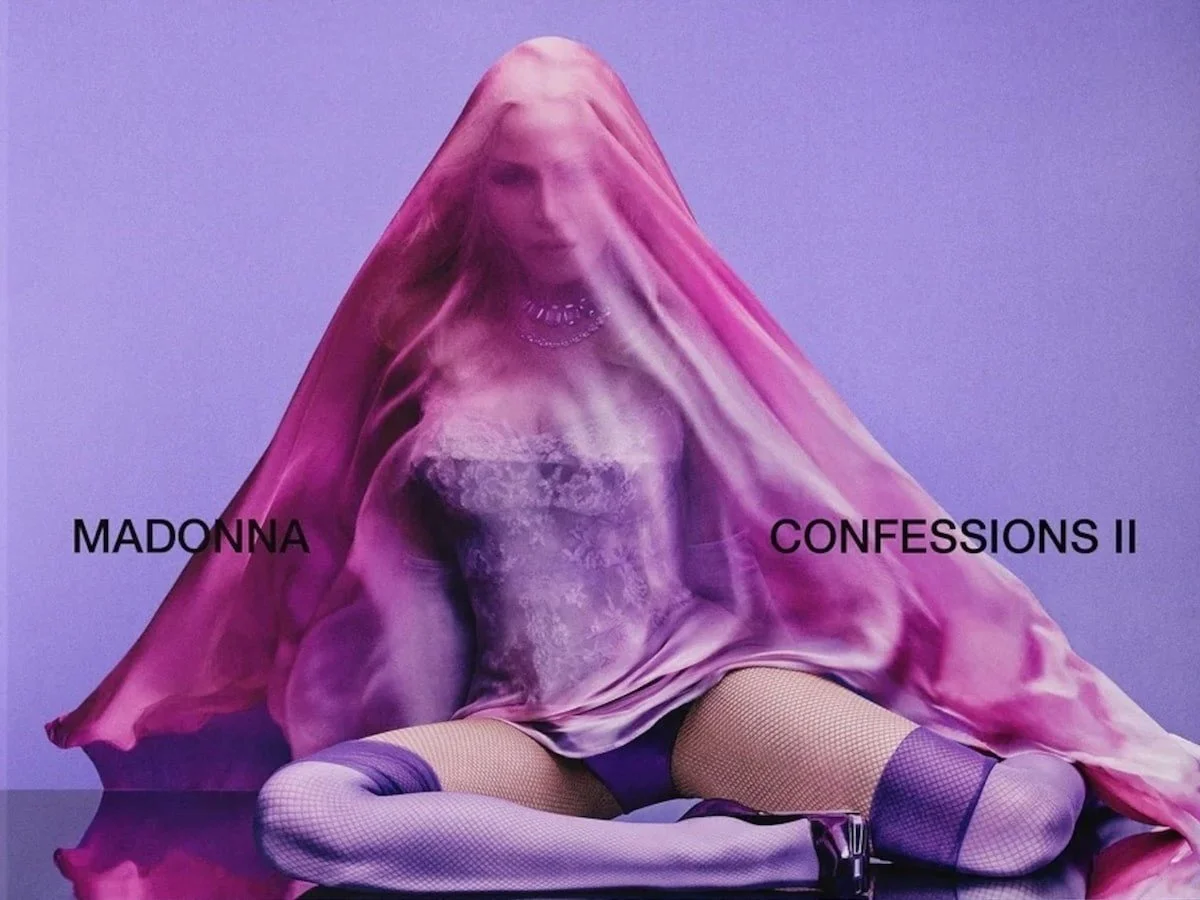
This image taken from the new promotional shots released this year for the upcoming launch of Confessions II
This year, Madonna feels present again. From her campaign with Dolce & Gabbana’s The One, to new musical releases, she is once more part of the cultural conversation. Her upcoming project, Confessions II, appears to revisit and reinterpret the sonic language she once redefined—this time through a house-inspired lens rooted in late 80s and early 90s influences.
The first track, I Feel So Free, carries a trance-like quality, building gradually, echoing fragments of her past while pointing toward something new. It feels familiar, yet forward-moving—like a conversation between eras.
As I reflect on these forty years, what stays with me is not the controversy, but the continuity of her impact. Madonna created space—for expression, for identity, for transformation. For many of us, she helped dismantle shame and replace it with possibility.
Today, discovering Madonna must feel different. The noise of controversy has softened, allowing her artistic contributions to come into clearer focus. What remains is the work itself—the music, the imagery, the message.
For those of us who grew up alongside her, she remains something more intimate: a constant, evolving presence. A reminder that identity is not fixed, that expression is power, and that reinvention is not only possible—it is necessary.
As she draws us back to the dancefloor this summer, I find myself returning with her—not just as a listener, but as someone who understands more deeply what she gave us.
Madonna has always made me hopeful.
Because, in the end, music makes the people come together